
One of the most misunderstood aspects of working after age 65 is how long you can stay on COBRA. The short answer is: Not. At. All. Practically speaking, COBRA coverage after age 65 does not provide you with health insurance.
Even if your HR folks tell you COBRA coverage will be available. Or if your employer offers to pay the monthly premium as part of your exit package. COBRA simply does not provide health insurance coverage for you once you are 65 or older, except in rare situations. Why? Because there are conflicting and competing laws that require coordination among insurance payers.
A big brick wall goes up at age 65
The best way I can describe what happens to your health insurance is to picture a gigantic brick wall. This brick wall goes up on the first day of the month that contains your 65th birthday. That’s because the health insurance, employment, and Medicare laws change the month you turn 65. (Or the month immediately preceding your 65th birthday if your birthday falls on the first day of any month.)
The assumption in insurance and Medicare laws is that you’re enrolled in Medicare Parts A and B. Your Medicare coverage therefore began the month of your 65th birthday. And Medicare will pay its share of your healthcare costs.
However, employment laws require that all workers have access to the same benefits at the same cost. So workers over age 65 who would otherwise be on Medicare can instead remain on the employer’s large group health insurance plan (LGHP). And later enter Medicare without penalties.
Which employees are eligible to continue on the LGHP?
A key to understanding your health insurance coverage after age 65 is “active employment.” To be on an LGHP, you must be actively working the requisite number of hours to access benefits. To be considered an active employee, you must receive W-2 wages.
If you are older than 65 and are paid as a W-2 employee by a large company, you do not need to enroll in Medicare yet. As long as you remain enrolled in the large company’s LGHP. If you are the active worker who also covers your spouse on the insurance plan, your spouse has coverage. Even if they are 65 or older.
If you retired at, say, age 60 and have stayed on the LGHP’s “retiree” plan as part of your exit package, you are not an active employee. You are a former employee who retired early. You need to ensure you’re enrolled in Medicare Parts A and B on the first day of the month that contains your 65th birthday.
Primary vs. secondary health insurance payers
Another critical thing to understand about health insurance is how bills are paid. One party pays your expenses first—the primary payer. Then another party pays any remaining costs—the secondary payer.
These transactions typically occur behind the scenes between different insurance plans or payers. Your employer selects the insurance carrier that serves as the primary payer. That means the primary payer pays first and covers most of the bills. You may also have a copay or deductible to meet.
But once you reach age 65, there’s a new sheriff in town: Medicare. Even if you are covered as an active employee in a LGHP, the payers coordinate benefits differently. That brick wall is now in place. And the Medicare coordination rules are in charge.

Problems arise when you retire and leave the LGHP after age 65. You think you can jump on COBRA. But it won’t provide your insurance!
COBRA coverage after age 65 pays secondary
It’s at this transition point that older folks get into trouble with health insurance. As they leave a company after age 65, they are typically offered COBRA to continue their health insurance. What is misunderstood is that COBRA coverage after age 65 can only pay secondary. And it can only pay secondary to Medicare.
Remember the brick wall? There are laws for younger folks on one side of that wall. And a completely different set of laws that govern health insurance and COBRA coverage on the other side of the wall. Regardless of what your HR folks tell you. Remember that HR is only responsible for understanding the rules and laws that apply to active workers. Retiring former employees are on their own.
The practical reality is that if a retiring worker leaves their health insurance plan after age 65, they have no health insurance. Unless they have Medicare A and B in place on time. Rather, they will be on the hook for 100% of any healthcare costs incurred until Medicare Parts A and B are turned on. And COBRA will not pay secondary to an individual.
Coordinating your exit from a LGHP into Medicare
If you are working after age 65, make sure you build your Medicare timeline and action plan to avoid any gaps in health insurance coverage. As long as you’ve been continuously covered under the LGHP since turning 65, you’re eligible to enroll in Medicare Part B “off-cycle.” You will not incur the steep penalty that many people seem to expect.
Here’s the general timeline you’ll want to follow if enrolling in Medicare well after age 65:
- 1 year before retirement, establish your exit/retirement date. Ideally, do this one year before you plan to leave. Plan to retire on the last day of whichever month you choose.
- Find out exactly when the LGHP coverage will end. It may stop on your last day and not continue through the end of the month. Plan to work until the 30th or 31st of your retirement month to maintain full coverage. Medicare A and B only start on the 1st day of any month.
- 3 months before retirement, start the application process:
- Ask your employer for a CMS L-564 form. It proves you’ve had LGHP coverage since age 65.
- Apply for Medicare Parts A and B, or for Part B only if you already have Part A.
There’s more to do…keep going…
- 1 month before retirement, apply for additional insurance. Choose your Medigap and a standalone Part D plan. Or a Part C (“Medicare Advantage”) plan if you’ve decided to substitute your Medicare.
- Stop HSA contributions at the correct time. When you apply for Part A after 65, it starts 6 months retroactively from your application date. Or back to the month of your 65th birthday if you apply between 65 and 65 ½.
- Make sure you stop any HSA contributions 6 month
- The month just prior to your 65th birthday month.
There are more details and nuances, but this timeline should help you get started with the transition to Medicare.
This is crazy! How does anyone know this stuff?
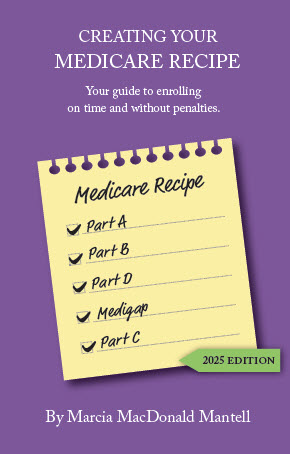
Honestly, you don’t really have a fighting chance. Unless you start your research and plans well in advance. You can start by reading my book, Creating Your Medicare Recipe, or by using Medicare’s website. Prepare to know very little. But be open to learning. Avoid being sold an insurance product that won’t work for you.
For some reason, Congress thinks all of us older workers magically know what’s in thousands of pages of various laws. And how they all interconnect. Once again, we find that neither the financial system nor the health insurance industry is simple. We do live in a complex country with many competing priorities and agendas.
My best advice is to embrace the crazy and get smart about it. One of the most important things to know is that COBRA coverage after age 65 just ain’t what you thought.