Finally getting set up with Medicare is like running a marathon for most people. It takes a lot of preparation, research and analysis, and a training plan. When they finally cross the finish line and have Medicare, it can feel like they’ve run 26.2 miles. But there is more to do. Yes, they are now covered by Medicare Parts A and B and a Medigap plan. They’ve got their prescription drugs covered in the most cost-effective Part D plan. Phew. But then, inevitably, a question comes up. What about dental? What should they do about dental plans and Medicare? Does Medicare even cover dental?
Well, there’s a story about that…
The original Medicare law was narrow in scope
Medicare became law in 1965. Congress debated, fought, and argued for 20 long years. Since the beginning of the Truman presidency. And finally came to an agreement that seniors did need help paying for healthcare in retirement. But only for very specific services.
The law focused on high-cost services that were difficult for retirees to afford. Specifically, the law helped retirees pay for hospital stays and skilled nursing care—called Medicare Part A. And it provided payment options for doctors, medical specialists, and other healthcare workers who care for retirees—Medicare Part B. Plus, Part B covered outpatient services such as dialysis and chemotherapy. Durable medical equipment (insulin pumps, oxygen, wheelchairs, etc.) costs were also covered by Part B.
The law clearly stated what Medicare would pay for. As importantly, Congress also earmarked specific costs that would not be covered by government funding. The law specifically carved out dental, vision, and hearing coverage. Therefore, starting in 1965, there was no cost-sharing for retirees needing most dental, hearing, or vision services.
It also left out coverage for long-term care. If you need more than 100 days in a skilled nursing facility, you are on your own to pay full costs. And that’s only if a bed is available.
The original law was meant to be amended and extended
Keep in mind that lawmaking requires what Congress calls “compromise.” I think of it rather as a boxing match. That approach leaves certain provisions out and keeps others in. But only after lawmakers get black eyes and bruises.
The typical process for making laws is that an initial bill gets rolled out. Over time, it gets amended and then expanded or contracted. The Medicare law has been on that same path. There have been plenty of adjustments to Medicare over the last 60 years.
But with this idea of compromise, there has never been enough support to add dental, vision, or hearing. So, seniors are on their own to cover these costs.
As dental costs have risen, there has been renewed interest in expanding Medicare. However, it is not a universal request. And there are other more expensive healthcare costs seniors need help with first.
For example, if you look at getting federal funding help for the long-term care crisis we’re facing in America, that’s a higher priority. Dental, vision, and hearing fall to the bottom of the list. The fact of the matter is, most seniors can afford to pay for their own needs here.
There is some coordination between Medicare and dental plans
Medicare does not cover general dental expenses. You need to plan to pay for your cleanings, basic “bite-wing” X-rays, and other more costly procedures like root canals, crowns, or implants.
However, Medicare Part A does cover oral surgery that requires hospitalization. There are specific parameters for what is covered if you need surgery, so you’ll have to do your homework in advance. And not all costs will be covered, even in situations that require hospitalization.
Your best course of action as you assess dental plans and Medicare is to talk to your dentist’s office. The office manager will have a good handle on what works and how much services costs. They’ll also let you know if they accept any dental plans once you’re on Medicare. And if so, which ones.
So what options are there for regular dental coverage?
The good news is that most retirees can buy individual dental plans in the private insurance market. But the question is: should you bother?
Here’s how to think about adding a dental plan to your Medicare package. Dental coverage is different from medical insurance—you are NOT buying insurance. Instead, you are paying for a cost-sharing arrangement that has an annual out-of-pocket dollar limit. And lots of conditions.
Generally, you have three dental plan options to choose from:
Choice 1: Standalone Dental Plans
You can buy a standalone dental plan from many insurance companies. There might be an option to purchase dental coverage from the same insurer that issued your Medigap policy. Or the Medigap you bought offers some type of dental discount. I’m finding each year that more new options become available from the insurance companies that offer Medigaps.
Another popular option is to buy a policy from Delta Dental, offered in most states. Private insurance companies such as MetLife, Humana, Anthem, and Guardian also offer individual plans. Use caution if you want to go this route. You still need to check with your dentist which variation of Delta Dental they accept.
Premiums tend to range from about $25 to $75 per person per month, depending on the level of coverage you choose. The maximum out-of-pocket coverage limit ranges from about $1,000 per year to $2,000 per year.
You can buy a dental plan at any time during your retirement. However, there are restrictions as to when these plans will cover non-basic dental services. You often must wait 6 or 9 months before getting coverage for a root canal, crown, implant, etc.
Choice 2: Medicare Part C Plans
You can exchange your Medicare Parts A and B for a Medicare Part C plan that includes dental coverage. Part C plans are marketed as “advantage” plans because they include some extra goodies. A popular extra is offering limited dental cost-sharing for dental treatments. Part C plans are private insurance plans offered by insurance companies.
These plans must meet federal government standards to remain in compliance. One of those requirements is that they pay out at least 85% of the premiums they receive to plan participants. So, they create their payment schedules to provide an allowance for dental services.
There is no additional premium to add dental coverage. But you are limited to a specific network of dentists that accept the specific Part C plan you choose. If an out-of-network dentist even accepts your insurance plan, you typically pay a higher amount for services.
But be cautioned…if you want a Part C plan for dental, you are also restricting yourself to a limited network for all your healthcare. Your primary care physician, specialists, and other providers will need to be in-network. And, your preferred hospitals and clinics will need to be in-network. You’re likely giving up a lot for a few dollars toward dental services.
Choice 3: Plans From Your Former Employer
Some employers allow their retired employees to remain on the company’s dental plan. It’s not that common, but your former employer may have such an option. This option is more common if you worked in the public sector.
Employers have no obligation to offer benefits to retirees. It’s just something that may be an option in your case. You’ll want to check with your employer’s HR or benefits folks to see if a carryover benefit might be available to you. Or to both you and your spouse. Don’t be disappointed if this is not offered.
Do You Even Need Dental Plans and Medicare?
In fact, you do not. You can simply pay out of pocket and avoid an additional monthly premium. The key is to talk to your dentist first. Ask them what they recommend for folks going on Medicare. Many dentists offer their own discounts or memberships that reduce the full-price cost of services.
Also, find out if they take any of the dental plans you are considering. It won’t do you any good to have a plan that your dentist doesn’t accept.
AARP has teamed up with several insurance companies to offer various dental discount programs. But you really need to find out what your dentist will accept for any discount plans.
Before you spend your money on dental plans or give up flexibility by going the Medicare Part C route, do the math. Is it really worth spending $600/year on premiums for two dental cleanings and a bite-wing x-ray?
If you anticipate having a lot of trouble with your teeth as you age, maybe do more research. If that’s the case, talk to your dentist about any available options that will save you money. Each individual needs to customize whether and how they’ll combine dental plans and Medicare.
Look at potential out-of-pocket costs for dental
It’s important to figure out how much you might spend on dental during retirement. Even if you have a dental plan and Medicare, you’ll still be on the hook to pay for a variety of dental needs throughout retirement.
Having a dental plan simply sets an annual dollar limit the plan will pay for all dental services and offers you a discount on those services. Will it really make sense to pay for such limited coverage?
You can get a general idea of average costs without insurance in the Delta Dental cost estimator tool. Costs will vary by the area of the country where you live and your zip code. Here’s a look at average costs for typical dentistry services you might need in zip code 02360:
- Regular, preventive cleanings= $150
- Bite-wing x-ray = $100
- Basic-tier procedures when needed, such as:
- Cavity filling = $300 for amalgam
- Root canal = $2,000.
- Crown = $2,000
- Major dental, when needed, such as:
- Tooth implants = $3,000 per tooth
- Dentures = $2,800 for partial upper; $5,000 for partial lower
- Bridge with 3 units and restorative crowns = $4,200
So, yes, if you need anything beyond basic cleanings, the services are pricey.
Your question, then, is: How often will I need anything beyond the basics? Of course, no one really knows. That’s why you buy insurance and consider discount options for dental plans when in Medicare.
Last thoughts
The bottom line with dental: Do your homework first. Talk to your dentist about costs with and without a dental plan. Make sure it is worth the monthly premiums if you don’t have many dental needs.
Assess the cost-benefit. Is paying $600 to $900 per year in premiums worth it for $400 in cleanings?
But what if you need a crown in five years? It’s a gamble. So, make the best decision you can based on what you know today. Fortunately, you can have a dental plan and Medicare. And you can add a dental plan years later in retirement.
You can also use your Health Savings Account (HSA) dollars to cover most, if not all, of your dental costs. If you have a Roth IRA, you might use some tax-free dollars to cover dental expenses. Or simply set aside a bucket of money or earmark a particular account for healthcare costs in retirement.
We are all responsible for our healthcare costs in retirement. The challenge is to find the right insurance or plans to help us pay for expenses that Medicare doesn’t cover by law.
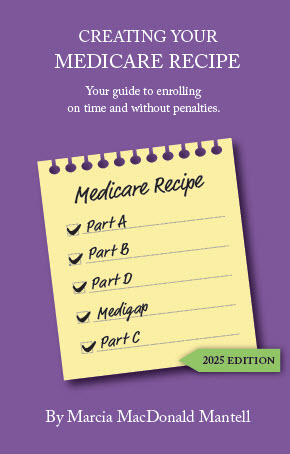
For more in-depth information about Medicare, please read my latest book, Creating Your Medicare Recipe.